
Why Slamming Your Ride Height Often Ruins Handling
Lowering a car has long been treated as a shortcut to better handling. The visual logic is easy to understand: a smaller gap between the body and the road suggests a lower center of gravity, a more planted stance, and sharper cornering. In practice, the result depends far less on how low the car sits at rest than on how its suspension links move through compression, rebound, and steering.
A static stance is only a snapshot. Once the car enters a corner, brakes over a crest, or drops a wheel onto a curb, the control arms, steering links, springs, dampers, and tires operate through changing geometric relationships. Lowering can push control arms beyond their useful operating window, alter the roll center, increase scrub radius through wheel changes, and create unwanted toe changes known as bump steer. The car may look aggressive while becoming less predictable on the road or track.
The correct approach is not to reject lowering, but to treat it as a complete geometry project. Ride height, roll center migration, steering-axis geometry, wheel offset, tie-rod angle, alignment, and damping all need to work together. When those relationships are measured and corrected, a lowered car can deliver crisp turn-in, stable braking, and communicative steering without sacrificing control over imperfect pavement.
The Roll Center Trap and Why Lowering Increases Body Roll
The roll center is an imaginary point in the transverse vertical plane through which lateral forces act on the sprung mass. It is calculated from the suspension’s instant centers, which are established by extending the control-arm or link lines until they intersect. Lines drawn from the tire contact patches toward those instant centers then converge to define the geometric roll center for that axle.
This point matters because the distance between the vehicle’s center of gravity and its roll center forms the geometric part of the roll moment arm. Lowering the body often swings the control arms upward or past horizontal. Instead of raising the roll center with the chassis, that movement can drive the roll center downward, sometimes below the road surface. The center of gravity may fall slightly, but the roll center can fall much farther, leaving a longer lever for cornering forces to act through.
That is why an aggressively lowered car can roll more than expected. The owner then increases spring rates or installs a much stiffer anti-roll bar to recover body control. Those parts may reduce visible roll, but they can also reduce mechanical grip by forcing the tires to share bumps rather than allowing each wheel to follow the surface independently. A higher roll center can reduce roll moment and body movement, but excessive height can introduce harsh load transfer, jacking forces, and increased link loads. As explained in detailed roll-center analysis, roll center behavior must be considered alongside three-dimensional kinematics, compliance, tire flex, and migration through travel.
- A low roll center generally increases the geometric roll moment arm.
- A very high roll center can create jacking and abrupt load transfer.
- The important target is a controlled roll-center path, not simply the highest possible point.
- Front and rear roll-center behavior must be balanced to avoid unpredictable handling changes.
Before adding stiffer bars, inspect control-arm angles at static ride height and through the first portion of compression. A car that relies on extreme roll stiffness to conceal poor geometry may feel sharp in a smooth paddock but become nervous over bumps, kerbs, and mid-corner surface changes. When optimizing track geometry or correcting an altered roll axis, consult detailed suspension technical setup resources before locking in spring and anti-roll-bar choices.
Demystifying Scrub Radius and Steering Wheel Kickback
Scrub radius is the distance on the road surface between the tire contact patch centerline and the point where the steering axis intersects the ground. That steering axis is defined by the upper and lower steering pivots, or by the equivalent steering-axis inclination and wheel geometry on a given suspension. If the axis meets the road inside the tire centerline, the car has positive scrub radius. If it meets outside, the scrub radius is negative. When both points coincide, scrub radius is effectively zero.
Wheel offset is one of the fastest ways to change this relationship. A low-offset wheel moves the tire outward, usually increasing positive scrub radius. The consequences include heavier steering, stronger kickback over potholes, tramlining, and a tendency to wander along grooves in the pavement. Wider tires and increased grip can amplify the steering torque. The effect is not limited to driver comfort, because a larger lever arm also increases shock loads through wheel bearings, ball joints, tie rods, and steering racks.
| Scrub radius condition | Typical behavior | Potential concern |
|---|---|---|
| Near zero | Reduced kickback and balanced steering effort | May not suit every brake and wheel package |
| Positive | More steering feedback and stronger braking pull | Single-wheel impacts can disturb the steering wheel |
| Negative | Can reduce some braking-induced steering effects | May produce unusual steering response and packaging limits |
During hard braking on split-grip pavement, positive scrub radius can make the car pull toward the side with greater grip because braking torque acts through a larger distance from the steering axis. A curb strike or pothole can produce the same problem on one wheel, creating sudden kickback. For a deeper mechanical breakdown of how offset changes steering behavior, see these technical reports on wheel offset dynamics. The correct target is vehicle-specific, but a modest scrub radius is generally easier to control than an extreme value created by aggressive wheel fitment.
Diagnosing Unintended Steering Input Over Undulations
Bump steer is a change in wheel toe caused by suspension movement rather than by driver steering input. As the wheel moves through compression and rebound, the tie rod and suspension links travel through arcs. If those arcs are not properly matched, the outer steering joint pulls or pushes the steering arm, turning the wheel slightly as the suspension moves.
Lowering commonly creates trouble because the tie rod can end up at a steep angle while the lower control arm sits in a different plane. The two components no longer sweep through compatible paths. On many cars, compression then produces unwanted toe-out at the front axle. A small amount can make a car feel responsive, but excessive toe change makes the vehicle dart when one wheel hits a bump or when the chassis takes a set in a corner.
The symptoms are often more useful than visual inspection alone. A car with bump steer may feel nervous on the highway, wander across crowned roads, or require constant steering corrections. On track, it can jump toward the outside of a corner over a compression zone, change balance during braking, or feel as though the front tires suddenly lose authority. Such behavior increases driver fatigue and can become a safety issue at speed.
- Watch for mid-corner darting when one front wheel crosses a bump.
- Check whether the car changes direction during hard braking over uneven pavement.
- Note constant highway correction, tramlining, or a steering wheel that feels unusually busy.
- Inspect tie-rod angles and measure toe change instead of guessing from static alignment.
A useful diagnostic process records toe-in and toe-out through both compression and rebound. The goal is not necessarily zero movement over every millimeter, which may be unrealistic, but a controlled and predictable curve. A car that has been lowered, lifted, or fitted with altered knuckles should receive this measurement before high-speed use.
The Workshop Guide to Restoring Crisp Handling and Kinematics
Geometry correction begins with measurements, not replacement parts. Establish the original ride height at a repeatable reference point, record wheel and tire dimensions, and note alignment settings. Then measure the control-arm angle relative to the chassis or ground. This baseline reveals whether the car has simply been lowered or whether the suspension has moved into a fundamentally poor operating position.
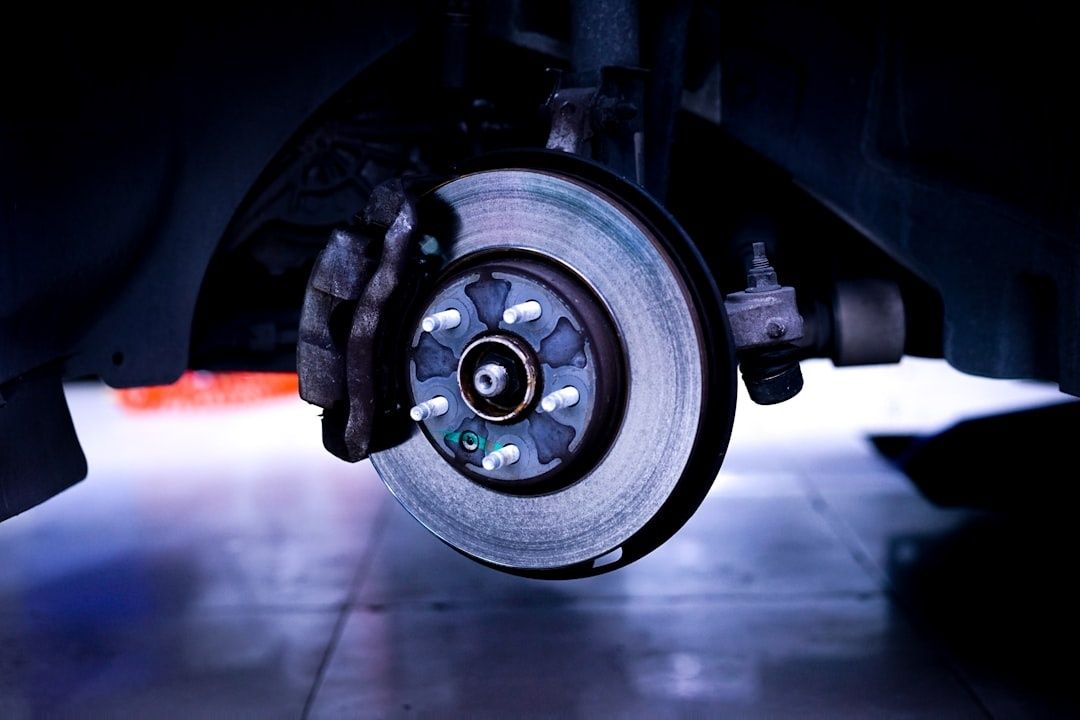
Roll-center correction may involve extended lower ball joints, revised steering knuckles, or drop spindles, depending on the platform. These components can restore a more favorable control-arm relationship while retaining a lower body position. However, part selection must account for ball-joint articulation, axle angles, wheel clearance, bump-stop engagement, and bearing loads. Raising the roll center without checking the rest of the system can exchange one problem for another.
- Measure static ride height and link angles. Record hub-center height, chassis reference points, control-arm position, and available bump and rebound travel. A proper baseline also includes corner weights when possible, since unequal loading can disguise geometry problems.
- Restore the dynamic roll-center position. Use extended lower ball joints, corrected knuckles, or drop spindles only where the application supports them. Verify that the revised parts preserve safe articulation and do not create contact at full lock or full compression.
- Map the toe sweep. Disconnect or safely isolate the spring and use a bump-steer gauge or dial indicator setup to move the suspension through its working range. Record toe at static height, compression, and rebound. Adjustable tie-rod ends, spacers, or shims can then raise or lower the outer joint until the toe curve is controlled.
- Bring scrub radius back under control. Recheck wheel offset, tire width, and tire profile after suspension changes. A taller tire may alter scrub radius modestly, but it cannot reliably compensate for an extreme offset choice. Confirm clearance to the strut, control arm, fender, and brake assembly before final alignment.
Alignment should follow the geometry work, not precede it. Adjusting toe before correcting bump steer may produce an excellent static printout while leaving the wheel pointed incorrectly under braking or compression. Likewise, adding negative camber can improve outside-tire support in a corner, but it will not repair a roll center that has migrated underground or a tie rod that is steering the wheel over every undulation.
Finish the setup with a road and track evaluation that separates symptoms. Steering kickback usually points toward scrub radius, compliance, tire construction, or damaged components. Body roll and poor mid-corner support suggest roll stiffness and roll-center behavior. Darting over bumps points strongly toward bump steer or excessive compliance. Check wheel bearings, ball joints, tie-rod ends, and bushings before tuning around a worn part.
Build for Lap Times and Tactile Road Feel
True cornering capability comes from kinematic harmony, not from the lowest possible fender measurement. A lower center of gravity can help, but only when the suspension retains useful travel and the links continue to guide the wheel through controlled camber, toe, and roll-center paths. Otherwise, the cosmetic stance hides a chassis that is working harder and communicating less clearly.
Before touching coilover collars, measure ride height, control-arm angles, roll-center movement, scrub radius, and toe change through travel. Correct the most influential fault first, then reassess alignment, damping, spring rates, and anti-roll bars. A measurement-first setup may take more time under the hood and on the alignment rack, but it produces the result that matters: a road-ready car with stable braking, clean turn-in, predictable response over bumps, and steering feel that builds confidence rather than fatigue.

