
The Vanishing Art of Pure Mechanical Linearity
There is a distinct tactile difference between a modern high-boost turbo engine and a high-revving naturally aspirated straight-six. A turbocharged engine can deliver astonishing acceleration, but its character is shaped by boost thresholds, electronic throttle mapping, charge pressure, torque management, and often hybrid torque-fill. A naturally aspirated inline-six responds more directly to the movement of your right foot. Open the throttle and the engine does not first build pressure in a compressor or wait for a control strategy to authorize torque. It draws air, accelerates, and communicates its intent through sound, vibration, and rising revs.
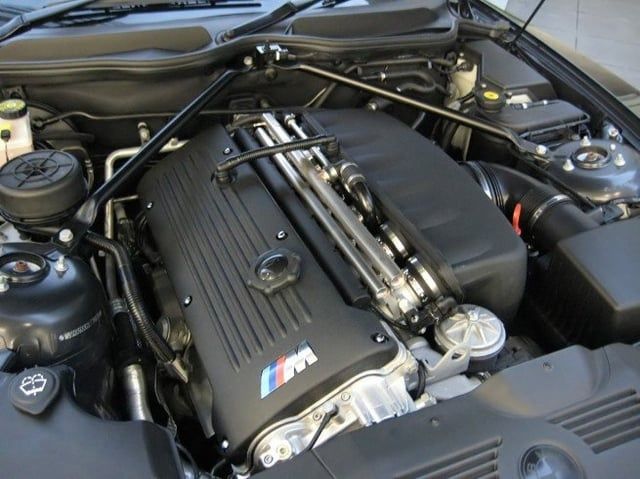
Engines such as BMW”s S54 and Toyota”s 2JZ-GE helped define the golden era of analog performance in the late 1990s and early 2000s. The S54 combined a 3.2-liter displacement, individual throttle bodies, a high redline, and a manual gearbox in cars such as the E46 M3 and Z3 M Roadster. The naturally aspirated 2JZ-GE offered a different interpretation, using a single intake plenum and a broad, dependable torque curve. Both remain compelling because their mechanical behavior is legible. This article examines the geometry, induction system, harmonic risks, and workshop routines that keep a straight-six enjoyable and dependable when the tachometer approaches the upper reaches of the dial.
Inherent Primary and Secondary Balance Explained
The inline-six layout is mechanically special because its six pistons can be arranged in three opposing pairs. As one piston pair travels upward, another pair mirrors the motion while the third pair moves in the opposite phase. With a correctly designed crankshaft and firing order, the reciprocating forces cancel naturally. Primary imbalance, caused by the basic up-and-down acceleration of the pistons, is neutralized, while secondary imbalance, created by the connecting rod angle and the unequal speed of the piston during the top and bottom halves of its stroke, also cancels.
That symmetry is the critical distinction. An inline-four generally needs to tolerate substantial secondary vibration, while a V6 uses two cylinder banks whose forces depend heavily on crankshaft design and bank angle. A crossplane V8 can achieve excellent refinement, but its crankshaft, firing order, exhaust arrangement, and counterweight strategy introduce a different set of compromises. The straight-six delivers its balance through geometry rather than through heavy counterweights or balance shafts that consume energy and add rotating mass.
The result is not merely a smoother idle. Reduced vibration means less disturbance at the crankshaft, bearings, accessory drive, and engine mounts. At high rpm, where every acceleration and deceleration of a piston happens thousands of times per minute, this matters directly to throttle feel. The engine can accept rapid changes in load without the coarse mechanical edge that often accompanies a less naturally balanced arrangement. A useful overview of the configuration is available in this straight-six engine reference, which explains why the layout has earned its reputation for refinement and mechanical elegance.
| Engine layout | Typical balance characteristic | Effect on analog response |
|---|---|---|
| Inline-four | Secondary forces commonly require compensation | Can feel buzzy as speed rises |
| V6 | Depends strongly on bank angle and crank design | Compact, but often less inherently smooth |
| Crossplane V8 | Excellent overall refinement with complex crank and exhaust behavior | Strong torque character, greater mechanical complexity |
| Inline-six | Primary and secondary reciprocating forces cancel naturally | Silky, predictable, and highly linear at high rpm |
The Throttle Body Geometry and Unfiltered Induction Response
The S54 sharpens the inline-six formula with individual throttle bodies, one butterfly serving each cylinder. The throttle pedal therefore has a short and direct relationship with airflow at the intake ports. Each cylinder sees a relatively small volume between its throttle plate and intake valve, so pressure changes occur quickly. This is one reason the S54 feels alert even before the engine reaches its most dramatic upper-rpm range.
The M54 and 2JZ-GE use a single throttle body feeding a shared plenum. That arrangement is less immediate in the pure motorsport sense, but it is not automatically dull. Plenum volume can improve cylinder-to-cylinder distribution and broaden torque, while the runners use pressure waves to support filling at particular engine speeds. The key difference is that a naturally aspirated system still responds to atmospheric pressure changes without waiting for a turbocharger to accelerate, a charge pipe to pressurize, and an electronic control system to manage torque.
Before replacing expensive components, use a structured diagnostic sequence. A soft pedal, uneven idle, or hesitation may be caused by a simple air leak rather than a failed throttle assembly.
- Check the throttle potentiometer or position sensor for dead spots, inconsistent voltage, and an implausible signal during slow pedal movement.
- Inspect intake boots, manifold gaskets, vacuum hoses, and brake-booster connections for unmetered air.
- On an ITB engine, verify that all six butterflies begin opening together and reach their stops together.
- Listen for a whistle or hissing sound, then confirm the suspected leak with a smoke test rather than guessing.
- Check ignition coils, plugs, fuel pressure, and air-meter readings before condemning the throttle system.
Synchronization is particularly important on an S54. If one runner opens earlier than the others, the engine may feel sharp in one part of the pedal range and ragged in another. A properly adjusted system produces a clean rise in airflow, while a leaking or misaligned system can mimic vanos, fuel, or ignition trouble. The best diagnostic approach is to compare throttle position, engine speed, airflow, and cylinder behavior instead of relying on the sound of the engine alone.
Torsional Resonance and the Hidden Threat of Crankshaft Harmonics
Perfect reciprocating balance does not make an inline-six immune to vibration. The crankshaft is long, and each combustion event applies a torque pulse that can twist it slightly along its length. The crank then springs back. At certain engine speeds, those pulses align with the crankshaft”s natural torsional frequencies, creating resonance. This is torsional vibration, a twisting oscillation that can exist even when the engine feels exceptionally smooth from the driver”s seat.
The harmonic damper controls this movement by allowing a tuned inertial ring and elastomer or viscous medium to absorb energy. If the damper deteriorates, the crankshaft, oil-pump drive, timing components, bearings, and accessory system may experience loads they were never intended to carry continuously. High-rpm engines are especially sensitive because a small problem in the damper can become severe when the crank crosses a critical frequency repeatedly.
Performance damper manufacturers such as VAC and ATI specifically warn that an S54 can suffer damaging harmonics despite its inherent balance. Their competition-oriented products are marketed for demanding rpm use, but any aftermarket damper must be selected as a complete system. Pulley diameter, belt speed, water-pump speed, timing marks, clearance, and crank-bolt installation all matter. A lighter pulley is not automatically an upgrade, and an underdriven water pump can reduce cooling circulation in conditions where the engine already generates substantial heat.
- Inspect the damper for cracked, swollen, or visibly separated elastomer around the outer ring.
- Run the engine and watch the pulley from a safe position for wobble, eccentric movement, or belt tracking problems.
- Check for belt dust, abnormal chirping, timing-mark movement, and unexplained accessory noise.
- Confirm crank-bolt torque and installation procedure against the factory service information.
- If the engine sees regular track use, evaluate a properly engineered fluid or viscous damper rather than waiting for visible failure.
The broader engineering lesson is that hidden internal behavior can control component life. Research on physics-informed model reduction shows how complex systems can be understood by preserving the mechanisms that govern important transitions, even when every microscopic interaction is not modeled. The same thinking applies in a workshop: an engine may sound healthy while an unseen resonance is loading a component at a particular speed. Symptoms should be interpreted as evidence of a system, not as isolated reasons to replace parts.
Workshop Blueprint for Maintaining High-RPM Straight-Six Longevity
High-rpm reliability begins with measurement. On an S54, valve clearance uses a shim-and-bucket arrangement, so the camshaft actuates a solid mechanical interface rather than a hydraulic lifter that automatically takes up clearance. Clearances should be checked with the engine cold and recorded cylinder by cylinder. A tight valve can reduce seating time and heat transfer, while excessive clearance creates noise, alters valve timing slightly, and increases impact loading.
- Remove the required covers and position each cylinder at the specified measurement point.
- Measure every intake and exhaust clearance with calibrated feeler gauges.
- Record the actual value, not merely whether it feels acceptable.
- Compare each reading with the factory range and calculate the required shim change.
- Recheck the measurement after installation and rotate the engine by hand before starting it.
Hydraulic-lifter engines such as many M54 variants require a different diagnostic mindset. Persistent tapping may indicate air ingestion, oil-quality problems, a stuck lifter, or wear rather than an adjustable clearance. The correct next step is to verify oil level and pressure, inspect service history, and identify whether the noise follows engine speed, temperature, or a particular cylinder. Guessing at valve components without confirming the symptom can turn a minor oiling issue into an unnecessary cylinder-head rebuild.
Used-oil analysis is another valuable tool for engines that see frequent high-rpm operation. Copper and lead readings can provide warning signs of bearing distress, although they must be interpreted with mileage, oil brand, sampling method, and trend data. A single elevated result is not a diagnosis, but a rising trend deserves an inspection. On an S54, rod-bearing service is often treated as preventive maintenance because bearing clearance, oil condition, rpm, and operating temperature all influence risk. Inspecting the removed shells provides more useful evidence than relying on a forum mileage rule alone.
Cooling-system work should be equally methodical. Inspect the water-pump impeller for damage, looseness, or material failure, test the viscous fan clutch for correct engagement when hot, and examine the radiator, expansion tank, hoses, thermostat, and belt drive as a complete circuit. The long cylinder head and extended coolant passages make proper bleeding essential. After service, fill according to the manufacturer”s procedure, run the engine through its specified warm-up cycle, allow it to cool completely, and recheck the level. Overheating is not a character trait of an analog engine; it is a preventable failure that can erase the value of an otherwise excellent powerplant.
Preserving the Definitive Mechanical Standard of Driving Purity
Digital drive-by-wire systems can be precise, and hybrid torque-fill can make a modern car devastatingly quick, but speed is not the same as mechanical communication. Software can smooth a torque curve, mask turbo lag, and distribute propulsion almost instantly. It cannot reproduce the particular sensation of opening six naturally aspirated intake paths and hearing the engine climb in direct proportion to pedal movement. In a manual car, that relationship connects throttle position, clutch timing, gear choice, engine note, and road speed into one continuous act.
Keeping that experience alive requires disciplined maintenance rather than nostalgia alone. Check clearances, verify throttle synchronization, monitor oil trends, inspect the harmonic damper, and overhaul the cooling system before symptoms become expensive. The naturally aspirated inline-six remains special because its precision is physical and audible. In an increasingly isolated automotive world, that transparent relationship between driver, engine, and road is not merely an old-fashioned charm. It is a mechanical standard worth preserving.

