
The High-Horsepower Trap in Amateur Motorsport
Grassroots track days are increasingly filled with cars producing 600 horsepower or more, often supported by launch control, torque vectoring, adjustable stability systems, and layers of software that manage traction before the driver has fully identified the problem. These cars can be spectacularly quick, but speed alone does not guarantee useful driver development. A machine that reaches the next braking zone at immense velocity may provide fewer clear lessons than a slower car that exposes every missed apex, abrupt steering input, and poorly timed throttle application.
The issue is not that modern electronics are inherently bad. Electronic aids can prevent expensive crashes and make powerful cars safer, particularly for drivers learning a new circuit. The problem appears when the safety net becomes so effective that poor fundamentals remain hidden. Tire abuse, late braking, excessive steering angle, and premature throttle can all be corrected by the car before the driver feels the underlying imbalance. Meanwhile, the cost of replacing large tires, high-performance brake components, and damaged aerodynamic parts can turn a single weekend into a financial stress test. A quiet counter-revolution is therefore gathering momentum, bringing lightweight, low-power sports cars back to the center of the paddock. For drivers comparing platforms and ownership costs, a carefully prepared track-ready sports car can offer more useful seat time than a much faster but less forgiving machine.
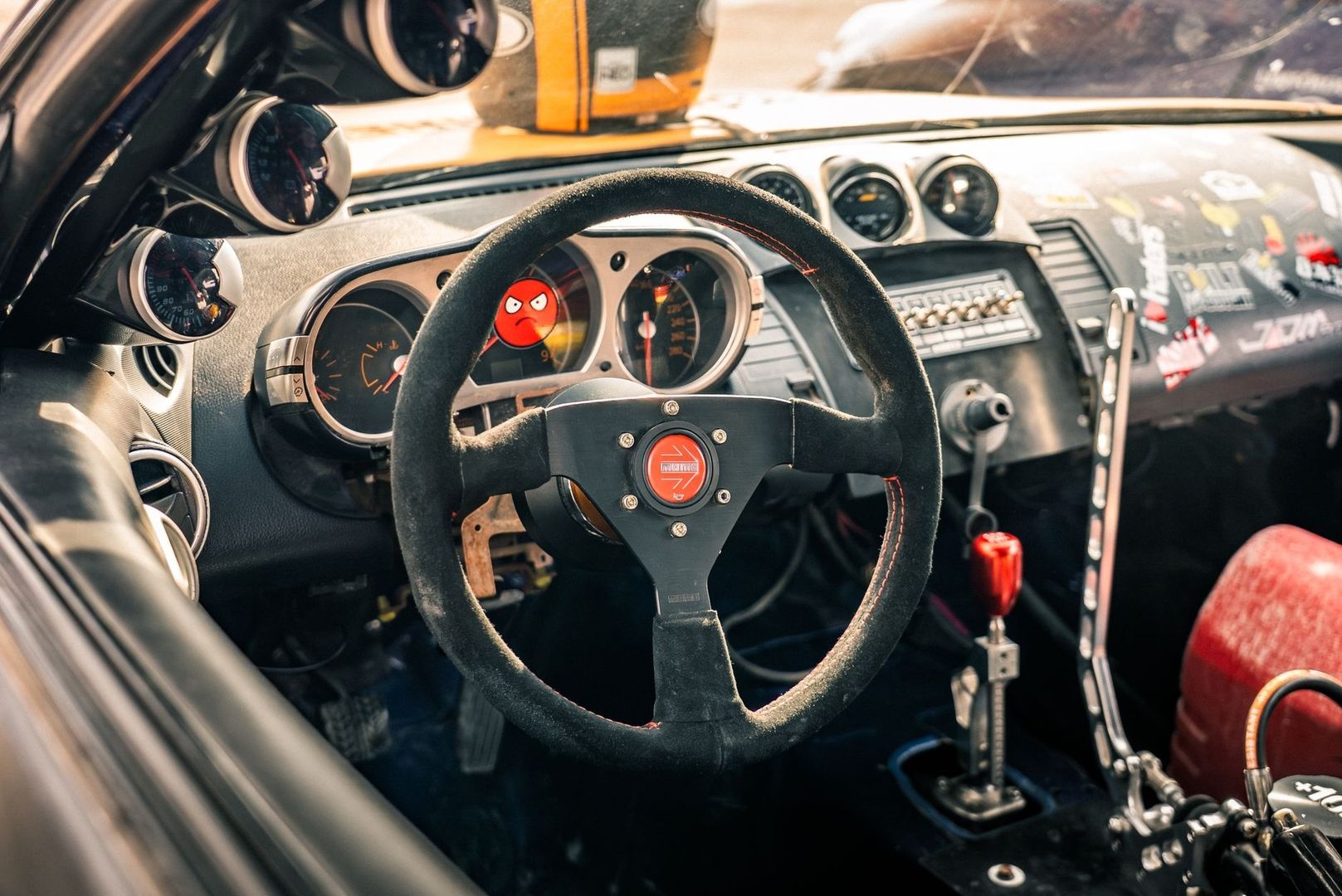
Why Electronic Assists Mask Driver Flaws
Torque vectoring, launch control, and stability algorithms are designed to manage forces that once demanded careful human control. Torque vectoring can brake an inside wheel or vary drive torque to influence the car’s yaw, meaning the vehicle may rotate toward an apex even when the driver’s steering and throttle timing are not especially clean. Stability control can reduce engine output or apply individual brakes when the rear begins to move. Launch control makes a perfect standing start repeatable, while sophisticated traction systems protect acceleration from abrupt wheelspin.
Those functions are useful tools, but they also alter the feedback loop between driver and chassis. In a lightweight analog car, the steering wheel, seat, brake pedal, and engine response communicate changes in grip with relatively little filtering. A driver can feel a front tire beginning to wash wide, recognize rear instability under power, and correct the input before the error becomes large. In a heavily assisted car, the correction may happen inside the control system. The lap time can look impressive while the driver’s understanding of weight transfer remains shallow.
Physical and cognitive data help explain this distinction. A driver may experience substantial strain from braking forces, heat, vibration, concentration, and repeated decision-making, even when software is correcting the car’s behavior. Academic discussion of real-time driver science and strain, available through motorsport human-factors research, illustrates why biometric feedback and driver workload matter when evaluating performance. The linked record does not, by itself, provide a complete accessible paper text, so it should not be treated as proof of a specific finding. It does, however, point toward a valuable method: compare telemetry, physical load, and driver inputs rather than judging skill by lap time alone.
- Steering traces: repeated corrections or excessive steering angle can reveal understeer that stability software is disguising.
- Brake traces: a long, uneven release often indicates difficulty transferring load smoothly onto the front axle.
- Throttle traces: early full throttle may show that traction control, rather than the driver, is managing corner exit.
- Physiological load: heart rate, grip tension, heat stress, and mental fatigue can identify where the driver is working hardest.
The Brutal Consumable Economics of Heavy Modern Cars
Weight creates a bill that appears in nearly every part of track-day ownership. A heavy car demands more from its tires during braking, cornering, and acceleration. It also carries greater kinetic energy into each braking zone, increasing heat in the pads, rotors, fluid, and wheel bearings. Large modern performance cars frequently require wide, expensive tire compounds and substantial brake hardware. Even when the engine remains reliable, consumables can become the limiting factor.
Heat is especially important. A powerful car can overwork a tire in only a few fast laps, then suffer from pressure growth and declining grip. Heavy rotors absorb considerable energy, but repeated high-speed braking can still create fluid temperatures and pad wear that force an early cool-down. Unsprung weight, meaning the mass of wheels, tires, brakes, and related components not supported by the springs, further affects suspension response. More unsprung mass makes it harder for the tire to follow uneven pavement and can increase stress on dampers, bushings, and wheel bearings.
The comparison below is illustrative rather than a universal price list. Actual expenses depend on circuit length, tire compound, weather, pace, vehicle condition, and local parts prices. The pattern remains consistent: lower mass generally allows more laps, slower wear, and more opportunities to learn before maintenance interrupts the day.
| Track-day factor | Heavy high-output car | Light analog car |
|---|---|---|
| Tire demand | Wide, expensive tires with rapid heat and wear buildup | Narrower, less costly tires that often provide longer sessions |
| Brake load | High-energy stops and faster pad or rotor consumption | Lower thermal demand and simpler brake management |
| Cooling requirement | Greater risk of heat soak in engine, transmission, and brakes | Usually easier to manage with ducting and maintenance |
| Insurance and repair exposure | High replacement value and expensive electronic or aerodynamic parts | Lower-value components and broader used-parts availability |
| Learning time | Shorter sessions may be needed to protect consumables | More sustained seat time for practicing technique |
This is why a modest analog platform can be faster in the practical sense. A driver who completes six consistent sessions in a light car may gain more than a driver who completes two interrupted sessions in a powerful one. Budget should be measured in useful laps, not only in the purchase price or peak horsepower figure.
The Analog Champions Keeping Grassroots Racing Alive
The NA and NB Mazda Miata remain reference points because they make momentum visible. Their modest power requires the driver to preserve speed through the corner, place the car accurately, and build throttle without wasting grip. The Subaru BRZ and Toyota GR86 offer a similar lesson with a modernized coupe layout, communicative balance, and enough performance to expose technique without immediately overwhelming the circuit. BMW E36 and E46 models bring rear-wheel-drive balance, strong aftermarket support, and clear chassis feedback, although age-related cooling, bushing, and electrical checks are essential.
These cars are not automatically inexpensive or trouble-free. A neglected E36 can consume a budget quickly, and an old Miata may need rust inspection, cooling-system work, and suspension renewal before it is genuinely road-ready. The diagnostic advantage is that repairs are usually understandable. Worn bushings, tired dampers, loose steering joints, and overheated brakes produce symptoms that the driver and mechanic can investigate directly, rather than searching through a complex network of proprietary electronic systems.
Standardized racing categories demonstrate why mechanical parity matters. Spec Miata racing is built around closely controlled equipment and a momentum-focused format, allowing racecraft, consistency, drafting, and traffic management to matter more than an unlimited horsepower budget. The same principle appears in classification systems such as NASA’s 2026 Super Touring and Time Trial structure, where weight-to-power ratios and modification factors account for power, tires, chassis, drivetrain, brakes, suspension, and other changes. Tight classification does not eliminate preparation differences, but it discourages a pure horsepower arms race.
- Miata: a low-cost platform for learning braking release, rotation, throttle discipline, and momentum preservation.
- BRZ or GR86: a balanced coupe with enough power to teach rear-wheel-drive management while remaining approachable.
- BMW E36 or E46: a rewarding chassis with strong feedback, provided cooling, bushings, and rear subframe concerns are addressed.
- Class-based builds: a practical route to close competition, shared setup knowledge, and a stronger paddock network.
Diagnostic Checks for Preparing a Lightweight Analog Platform
Preparation should begin with reliability and control, not engine upgrades. Before replacing parts, identify the symptom and reproduce it safely. Wandering under braking may indicate compliance bushing wear, alignment problems, or a sticking caliper. A delayed steering response can point to rack play, worn tie-rod ends, loose rack mounts, or soft front control-arm bushings. A pulsing pedal may indicate disc thickness variation, pad deposits, or a wheel-bearing issue. Each fault has a different remedy, and installing stiffer springs before confirming the basic condition can make the car less predictable.
- Inspect steering and suspension: check rack mounts, inner and outer tie rods, ball joints, control-arm bushings, dampers, wheel bearings, and fastener torque. Any looseness in a steering component is a safety issue, not an optional handling upgrade.
- Check brakes and fluid: use fresh high-temperature fluid, inspect pad thickness and rotor condition, and confirm that pedal travel remains consistent. Brake ducts can help, but they cannot repair a sticking caliper or contaminated fluid.
- Establish alignment settings: record camber, caster, toe, and corner weights where possible. A stable baseline makes it easier to identify whether a lap-time change came from technique, tire condition, or hardware.
- Evaluate tires: inspect heat cycling, shoulder wear, pressures, and tread condition. A tire that has become hard or overheated may feel like a suspension problem.
- Confirm cooling reliability: pressure-test the system, inspect hoses and clamps, clean radiator fins, verify fan operation, and monitor engine and oil temperatures before increasing power.
- Test progressively: begin with moderate sessions, log tire pressures and temperatures, and change one variable at a time. Consistency is more valuable than a single dramatic lap.
Alignment deserves particular attention because it connects the mechanical platform to driver feedback. Excessive toe can make the car nervous, while insufficient negative camber can destroy the outer shoulder of a front tire during repeated cornering. The correct setting depends on the chassis, tire, circuit, and driving style, so values should be documented rather than copied blindly from another build. If the car changes direction unpredictably, start with inspection and measurement before fitting a more aggressive spring or anti-roll bar.
Use a repeatable test plan to separate driver improvement from mechanical improvement. Run comparable fuel loads, tire pressures, warm-up procedures, and session lengths. Record braking points, throttle application, steering corrections, tire temperatures, and any change in pedal feel. A lightweight car rewards this discipline because its behavior is legible. When a lap improves after a smoother brake release or a cleaner apex, the driver can feel and verify the reason instead of crediting an algorithm.
Reclaim the Paddock by Mastering Momentum
Trading brute straight-line horsepower for lightweight mechanical honesty is not a step backward. It is a practical way to develop braking accuracy, car placement, throttle control, and consistency while protecting the budget. A car that communicates its limits clearly gives every mistake a useful explanation. The driver learns why the front tires washed wide, why the rear became unstable, or why an early throttle application sacrificed exit speed.
The strongest grassroots paddocks are built around that shared understanding. Drivers compare tire pressures, lend tools, discuss alignment changes, and help diagnose a strange vibration before it becomes a failure. Before the next regional track weekend, consider testing a well-maintained momentum car and measuring success by clean laps, reliable temperatures, and repeatable technique. The goal is not to make the slowest car on the circuit. It is to choose a machine that makes every lap teach something, keeps the wrenching manageable, and leaves enough budget for the next session.

